
Studying English in Ireland is one of the smartest ways to become truly fluent: you learn in an English-speaking country, you can work legally while you study, and you are a short flight from the rest of Europe. This complete guide walks you through everything you need to plan your trip — the student visa, costs, working, choosing a city, and picking the right school.

Non-EU/EEA students who take a long-term English course (typically 25 weeks on a programme from the government’s ILEP list) can apply for the student permission known as Stamp 2. EU/EEA citizens do not need a visa. Because immigration rules change, always confirm the current requirements with an official source and with the school before you travel.
Related: Visa Information and The Complete Guide to the Irish Student Visa.
With Stamp 2 permission you can work part-time up to 20 hours per week during the academic year, and up to 40 hours per week during the official holiday periods (June–September and 15 December–15 January). After you arrive, your first steps are usually to get a PPS Number, open a bank account, and prepare a CV in the local format.
Related: Get your PPSN and Find a Job.

Your budget depends on the course length, the city, and your lifestyle. As a rough monthly guide, plan for accommodation, food, transport (Leap Card), and leisure. On top of living costs, budget for tuition, the enrolment fee, medical insurance, the immigration registration (IRP) fee, and flights. Please confirm the latest figures on our up-to-date Price List before you plan.
Dublin is the capital — busier, with more job opportunities and a lively social scene. Cork is Ireland’s second city — more relaxed and welcoming, usually with a lower cost of living and a strong sense of community. Erin College has campuses in both cities, so you can choose the environment that suits you.
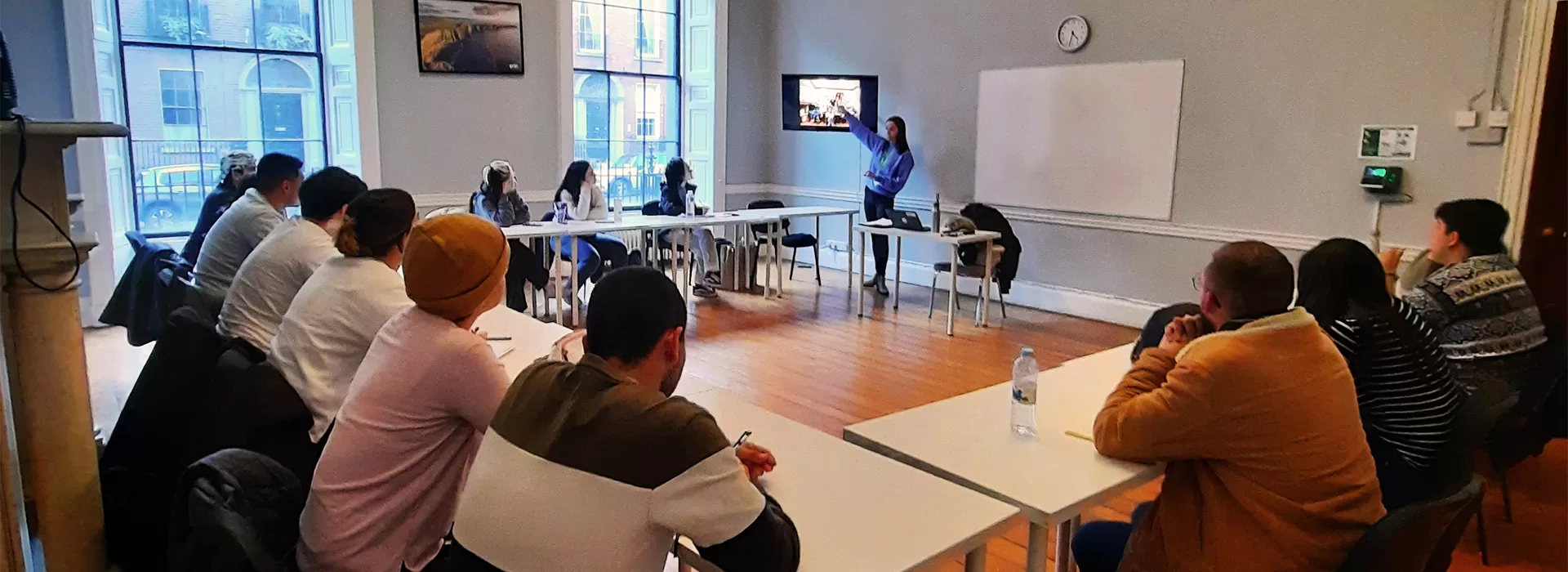
Erin College is accredited by ACELS, is on the ILEP list, and keeps a balanced mix of nationalities in every class. Explore our courses or request a quotation.
No — all levels are welcome, from beginner to advanced.
16 years old. Students aged 16–17 need approval from their parents or guardians.
Yes. Students receive a certificate on finishing the course and sitting the exam. To continue to university, you will need an internationally recognised exam such as IELTS.